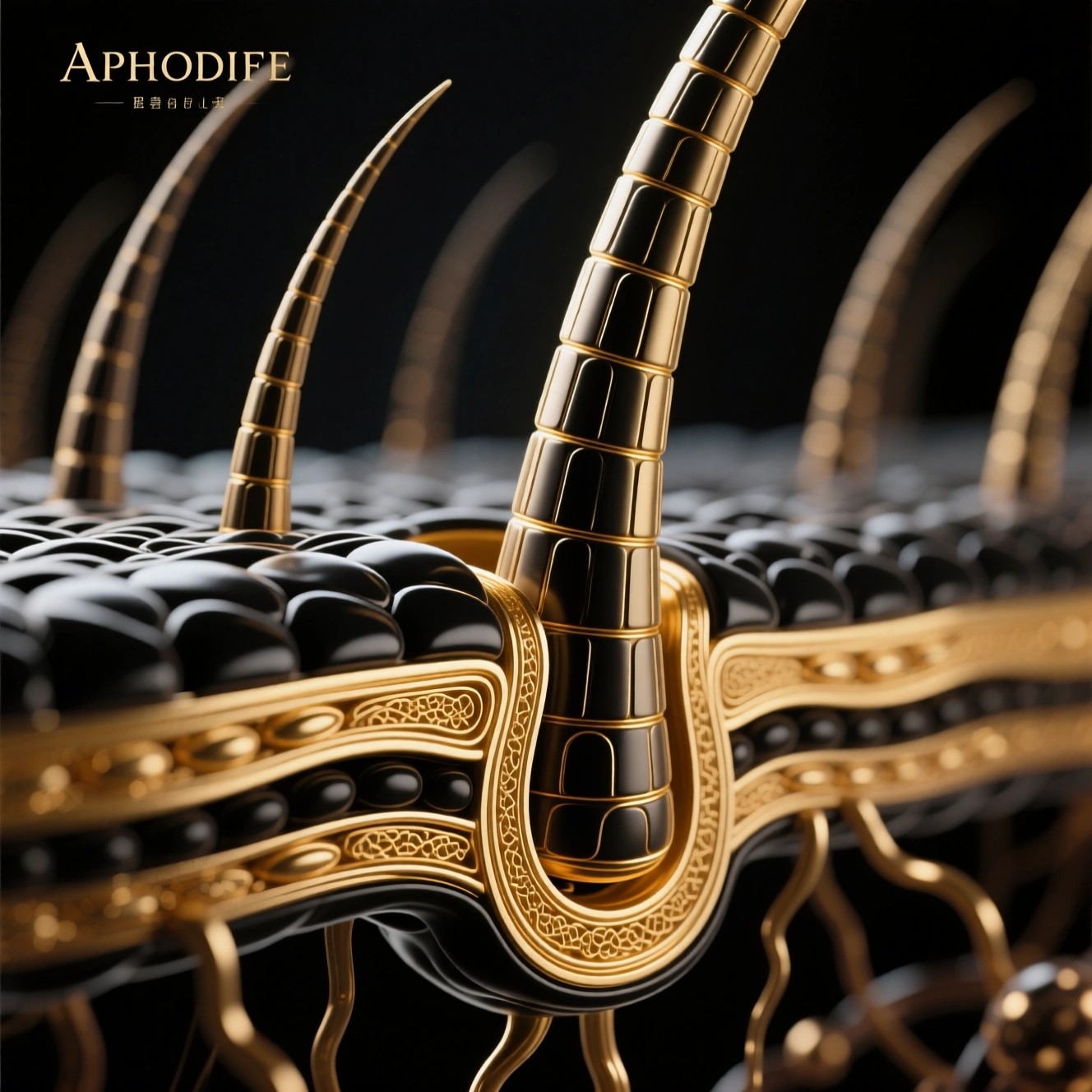
The Scientific Structure of Human Hair
Introduction
Human hair is a sophisticated biological fiber composed of proteins, lipids, and trace elements that function together to provide protection and aesthetic value. Understanding its microscopic architecture helps both clinicians and cosmetic scientists improve hair health and develop effective restoration therapies.
1. Anatomical Overview
Hair originates from the hair follicle, a dynamic mini-organ embedded within the dermis. The follicle comprises several essential regions:
- Bulb: located at the base, containing the dermal papilla, which supplies nutrients and growth signals.
- Root sheath: envelops the emerging fiber, guiding its form and cellular composition.
- Sebaceous gland and arrector pili muscle: connected to each follicle, maintaining lubrication and thermoregulation.
2. Chemical Composition
The hair fiber itself is composed mainly of keratin, a structural protein rich in cysteine residues forming disulfide bonds. These bonds are responsible for the fiber’s strength and resistance to mechanical stress. Minor constituents include:
- Lipids: forming a protective barrier for moisture retention.
- Melanin pigments: determining natural color and UV sensitivity.
- Trace minerals: such as zinc and copper, which influence enzymatic functions within the follicle.
3. Structural Layers of the Hair Shaft
Microscopically, each hair consists of three primary layers:
- Cuticle: the outermost layer, made of overlapping cells resembling roof shingles; it provides shine and protection.
- Cortex: the thick middle layer, containing tightly packed keratin fibrils and pigments responsible for elasticity, texture, and color.
- Medulla: the innermost core, variably present; contributes to thermal insulation and light reflection.
4. Growth Cycle
Human hair follows a cyclic pattern divided into three stages:
- Anagen (active growth): lasts 2–7 years.
- Catagen (transition): a brief involution phase.
- Telogen (resting): ends with shedding and renewal.
The duration of each phase defines hair length and density, influenced by genetics, hormones, and environmental stressors.
5. Factors Affecting Hair Structure
External aggressors such as UV radiation, chemical treatments, and heat exposure can disrupt the cuticle integrity and alter keratin configurations. Internally, nutritional deficiencies or hormonal disorders may impact the follicular microenvironment, leading to fragility and thinning.
6. Innovations in Hair Science
Modern research in biomaterials and stem-cell therapy is revolutionizing hair restoration. Synthetic keratin peptides, nanolipid coatings, and growth factor delivery systems are currently investigated to reinforce damaged fibers and regenerate follicles.
Conclusion
Hair is more than a cosmetic feature—it reflects complex biochemical harmony between cellular biology and environmental interactions. Knowing its molecular and anatomical structure empowers cosmetic technology to preserve and restore the natural elegance of human hair.